
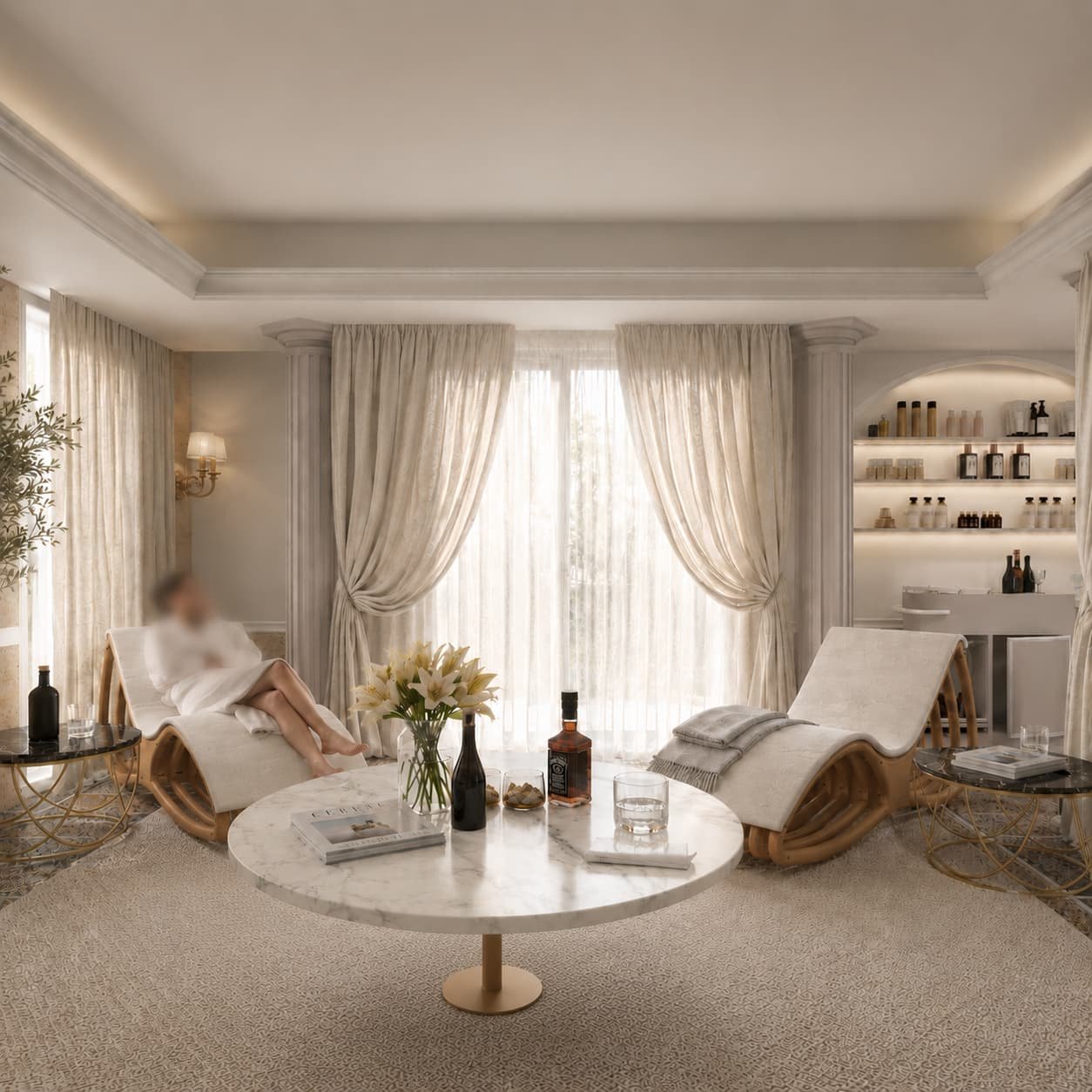

The spas that feel timeless in five years share something the trend-chasers don't: every decision is made in service of how a guest feels, not how a room photographs. That distinction is becoming more important, not less, as spa interior design absorbs new technology, new materials and a much broader definition of what "wellness" means. Here's what's actually shaping spa interiors right now, and why each shift matters beyond the mood board.
Wellness Is Moving Beyond the Treatment Room
For years, "spa design" meant designing for a single type of visit: a booked treatment, a robe, a quiet exit. That's changing. Recovery, rest and restoration are increasingly treated as a lifestyle rather than an occasional service, and spa interiors are being asked to support a wider range of moods and stays, from a twenty-minute reset between meetings to a half-day retreat.
Practically, this means spas are designing for more varied journeys through the space: arrival lounges that double as social areas, transition zones between "active" and "restorative" experiences, and quiet corners that don't require a booking to use. A spa that only accommodates the linear treatment-room journey is starting to feel dated next to ones offering flexible, multi-use wellness environments.
Smart Technology, Used Quietly
Technology in spa design has matured past the novelty phase. The best integrations are the ones guests barely notice: climate and humidity control that adjusts automatically by room and time of day, lighting that shifts colour temperature to support relaxation rather than alertness, and app-based or in-room controls that let guests personalise their own environment without needing staff intervention.
The key design principle here is restraint. Visible screens, harsh control panels and anything that reads as "corporate meeting room" work against a spa's purpose. Good tech integration in modern spa design is felt, not seen, supporting the experience invisibly rather than becoming part of it.
Personalised, Not Standardised, Experiences
Guests increasingly expect a spa to respond to them individually rather than offering one fixed environment for everyone. This is showing up in design in a few concrete ways: modular or reconfigurable treatment spaces that can be set up differently depending on the service booked, adjustable lighting and sound presets guests can select, and smaller, more intimate treatment suites replacing some of the large shared relaxation halls of a decade ago.
For designers, this means building in flexibility at the specification stage. Lighting circuits, acoustic zoning and furniture layouts all need to support variation, not just one "hero" configuration for the opening photoshoot.
Natural, Honest Materials
Stainless steel, natural stone, timber and other materials that age visibly and honestly continue to dominate spa material palettes, and for good reason. These materials read as calm and grounded in a way that highly polished, synthetic finishes don't, and they tend to soften and improve with age rather than looking dated.
There's also a practical wellness argument here: natural materials generally off-gas less, feel warmer to the touch, and support the broader move toward healthier indoor environments that guests are now actively seeking out, not just tolerating.
Warm Neutrals Over Cold Minimalism
The all-white, clinical-minimalist spa aesthetic that dominated the last decade is giving way to something warmer. Soft neutral palettes, think warm stone, sand, muted clay and layered off-whites, are replacing the stark white-and-chrome look that can feel sterile rather than restorative.
This shift reflects a broader design principle worth remembering for any spa brief: sterile reads as "clinical," and clinical undermines the sense of restoration a spa is meant to deliver. Warmth, texture and softness do more work toward relaxation than pure visual cleanliness does.
Biophilic Design as a Baseline, Not a Bonus
Bringing nature into interior spaces, through planting, natural light, organic forms and views out, has moved from "nice to have" to expected in spa design. This isn't just a stylistic detail. There's a growing body of evidence connecting nature-integrated environments to measurably reduced stress, which is directly relevant to a space whose entire purpose is stress reduction.
In practice, biophilic design in spas now goes beyond a few potted plants. It includes material choices that echo natural forms, layouts that maximise daylight and outdoor views, and architectural integration with gardens, terraces or courtyards wherever the site allows it.
Lighting as a Wellness Tool, Not Just a Mood-Setter
Lighting design in spas is increasingly informed by circadian science: the idea that light temperature and intensity should shift to support the body's natural rhythms rather than staying fixed. Cooler, brighter light supports alertness in arrival and active areas; warmer, dimmer light supports rest and recovery in treatment and relaxation spaces.
Layering matters as much as temperature. Ambient, task and accent lighting on independent controls give a space the flexibility to shift mood across the day, rather than relying on one flat scheme that has to work for every moment equally.
Sustainability as an Expectation
Sustainable sourcing, energy-efficient systems and materials with genuine longevity are no longer a differentiator worth shouting about. They're close to a baseline expectation from clients and guests alike. This shows up in spa design through responsibly sourced timber and stone, energy-conscious HVAC and lighting specification, and a general preference for materials and finishes that will still look good in ten years rather than needing replacement in three.
What This Means for Your Next Spa Project
None of these shifts are about chasing a look. They're about designing spa environments that do a better job of the one thing a spa is actually for: helping someone feel genuinely restored. Smart technology should disappear into the experience. Materials should feel honest rather than performative. Lighting should work with the body, not just the camera. And the space itself should flex to the person in it, rather than asking every guest to fit the same mould.
If you're planning a new spa or refreshing an existing one, the studios getting this right are the ones treating these as design principles to weigh against your specific brief and site, not a checklist to tick off.
Frequently Asked Questions
What is the biggest trend in spa interior design right now?
The move toward warmer, more natural material palettes and away from cold, clinical minimalism, paired with lighting and technology that quietly support relaxation rather than drawing attention to themselves.
Does biophilic design actually make a difference in spa spaces?
Yes. Nature-integrated environments are consistently linked to reduced stress, which makes biophilic design directly relevant to a space built around restoration rather than a purely aesthetic choice.
Is smart technology worth the investment in a spa design project?
When it's specified well, yes. The most effective technology in spa environments works invisibly, adjusting climate, lighting and personalisation automatically, rather than adding visible complexity for guests or staff.

0 Comments